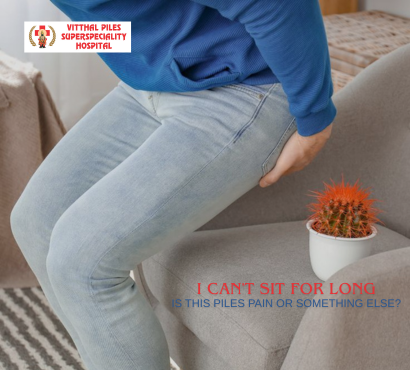
This is a common concern among people who experience discomfort while sitting, especially when the pain becomes worse after passing stool or after sitting continuously at work. Because piles are widely known to cause anal discomfort, many people immediately assume that haemorrhoids are responsible.
However, pain while sitting piles is not always a straightforward diagnosis.
Piles can certainly cause discomfort, swelling, irritation and pain, particularly when an external haemorrhoid becomes inflamed or develops a blood clot. But pain around the anus can also occur because of an anal fissure, thrombosed haemorrhoid, perianal abscess, anal fistula, constipation-related irritation or other conditions.
The nature of the pain matters. Is it sharp or burning? Is it throbbing and continuous? Does it happen only during bowel movements? Is there a lump, swelling, bleeding or discharge? These details can help a doctor understand what may be causing the problem.
The important point is that not every type of anal pain is piles, and persistent pain should not simply be ignored or treated repeatedly without knowing its cause.
Why Does Sitting Cause or Increase Anal Pain?
Sitting puts pressure on the tissues around the anus and lower pelvis. If there is already inflammation, swelling, a wound or an irritated area, that pressure can make the discomfort more noticeable.
For someone who works at a desk, drives for several hours, studies for long periods or spends considerable time sitting at home, the symptoms may become particularly troublesome.
The pain may feel like:
- A dull ache around the anus
- Burning or irritation
- Pressure or heaviness
- A sharp pain when sitting down
- Throbbing discomfort
- Tenderness around a lump
- Pain that becomes worse after bowel movements
- Discomfort that makes it difficult to sit on a chair for long
The location and character of the pain are more useful than simply saying “I have piles.”
For example, a sharp pain associated with passing stool may point towards a fissure, while a constant throbbing pain with swelling or discharge can be associated with an infection or abscess. External haemorrhoids can also cause pain and swelling, particularly when they become inflamed or thrombosed.
Can Piles Make It Difficult to Sit?
Yes, piles can make sitting uncomfortable.
Haemorrhoids are swollen blood vessels in and around the lower rectum and anus. Internal piles often cause bleeding rather than significant pain. External piles, however, can cause discomfort, irritation and swelling. If a blood clot develops inside an external haemorrhoid, the area can become suddenly swollen and very painful.
Pain from piles may become more noticeable when:
- You sit for a long time
- You have recently passed hard stool
- You have been straining during bowel movements
- The piles have become swollen
- There is an external haemorrhoid
- A thrombosed haemorrhoid has developed
- A prolapsed haemorrhoid becomes irritated
Long periods of sitting, especially prolonged sitting on the toilet, can also increase pressure in the anal area and contribute to haemorrhoid symptoms.
But there is an important distinction: severe or persistent pain should not automatically be labelled as piles.
What Does Piles Pain Usually Feel Like?
Piles-related discomfort can vary depending on the type and severity of the haemorrhoid.
Some people experience itching, irritation or a feeling of pressure rather than intense pain. Others may notice a tender lump around the anus.
If an external haemorrhoid becomes thrombosed, the symptoms can be much more intense. A thrombosed haemorrhoid may produce a firm or hard lump, swelling and significant pain.
You may notice:
- Pain while sitting
- Tenderness around the anus
- Swelling
- Itching
- Bright red bleeding during or after stool
- A lump near the anal opening
- Discomfort while walking
- Irritation after bowel movements
The combination of symptoms matters. For example, pain with a tender lump may have a different cause from bleeding without pain.
This is why simply asking whether you have piles may not provide the complete answer.
Could an Anal Fissure Be Causing the Pain?
Yes.
An anal fissure is a small tear in the lining of the anal canal. It commonly occurs after passing hard or large stools or because of constipation and straining.
The pain from an anal fissure is often described as sharp, cutting or burning. It may occur during bowel movements and can continue for some time afterwards. Bright red blood may also be noticed on the toilet paper or stool.
A person with a fissure may say:
“The pain starts when I pass stool and continues afterwards.”
This pattern can be different from typical haemorrhoid discomfort.
Some fissures can also cause a small skin tag or lump near the affected area, which may lead a person to assume that the problem is piles.
If you repeatedly experience severe pain during or after bowel movements, especially with bleeding, an evaluation can help determine whether the problem is a fissure rather than haemorrhoids.
Could a Fistula Cause Pain While Sitting?
An anal fistula can also cause pain around the anus, particularly when there is inflammation or infection.
A fistula is an abnormal tunnel that can develop between the anal canal and the skin near the anus. It often develops following an infection or an anal abscess.
Possible symptoms include:
- Recurrent pain around the anus
- A small opening near the anal skin
- Swelling
- Redness or irritation
- Pus or blood-like discharge
- Pain while sitting
- Repeated episodes of swelling
- Sometimes fever
Pain associated with a fistula may feel different from ordinary piles discomfort. It can be persistent or throbbing, and the presence of recurrent discharge is particularly important.
If the symptoms keep returning after temporarily settling, it is better to investigate the underlying cause rather than repeatedly treating the discomfort.
For patients looking for a fistula treatment hospital in Pune, proper evaluation is important because fistula management depends on the location and pathway of the fistula.
What If It Is an Anal Abscess?
An anal or perianal abscess is an infection that causes a collection of pus in the tissues around the anus.
Pain from an abscess is often different from mild piles discomfort. It may become increasingly intense and may feel constant or throbbing. Swelling and tenderness can develop, and some people may also develop fever or feel generally unwell.
Symptoms that may raise concern include:
- Increasing anal pain
- Severe tenderness
- A painful swelling or lump
- Redness or warmth
- Fever or chills
- Pus or discharge
- Pain that does not settle after bowel movements
- Difficulty sitting because of pressure and tenderness
Severe anal pain accompanied by fever, chills or discharge requires prompt medical assessment.
An abscess should not be assumed to be an ordinary pile simply because the swelling is located near the anus.
How Can You Tell the Difference Between Piles, Fissure, Fistula and Abscess?
Symptoms can overlap, but certain patterns may provide useful clues.
| Condition | Common Pain Pattern | Other Possible Symptoms |
| Piles | Discomfort, irritation or pain, especially with external piles | Bleeding, itching, swelling, lump |
| Thrombosed haemorrhoid | Sudden and significant pain | Firm lump, swelling, inflammation |
| Anal fissure | Sharp or burning pain during/after stool | Bright red bleeding, small skin tag |
| Anal fistula | Persistent or recurrent discomfort | Discharge, opening, swelling |
| Anal abscess | Constant or throbbing pain | Tender swelling, redness, fever, pus |
This table is only a general guide. Symptoms can overlap, and a physical examination may be necessary to identify the actual cause.
Why Is the Pain Worse When Sitting?
The answer depends on what is causing the pain.
When an external haemorrhoid is swollen, direct pressure from a chair can make the area more uncomfortable. A thrombosed haemorrhoid can be particularly sensitive because of the inflammation and clot within the haemorrhoidal tissue.
With a fissure, sitting may not be the primary trigger, but prolonged pressure and muscle tension around the anal region can make an already painful condition feel worse.
With an abscess or fistula, pressure over an inflamed area may significantly increase discomfort.
There can also be causes unrelated to piles, including muscular or nerve-related pelvic pain and problems affecting nearby structures. Anal pain has a wide range of possible causes, so persistent symptoms deserve proper assessment.
Does Constipation Make Piles Pain Worse?
It can.
Constipation often means passing hard stools and straining during bowel movements. This can increase pressure around the anal tissues and aggravate haemorrhoids or an existing fissure.
Repeated straining may create a cycle:
Constipation → hard stool → straining → irritation → pain → difficulty passing stool → more constipation
Breaking this cycle is an important part of managing many anorectal conditions.
Helpful habits include:
- Eating adequate fibre
- Drinking sufficient fluids
- Staying physically active
- Avoiding unnecessary straining
- Responding to the urge to pass stool
- Avoiding prolonged toilet sitting
- Managing recurring constipation instead of treating it only occasionally
Keeping stools soft can reduce mechanical irritation and make bowel movements more comfortable.
What Can You Do If Sitting Is Painful?
If the pain is mild and there are no warning signs, some basic measures may provide temporary relief.
Keep bowel movements comfortable
Avoid pushing forcefully during bowel movements. If constipation is present, improving fibre and fluid intake can help maintain softer stools.
Avoid prolonged toilet sitting
The toilet should not become a place to sit for extended periods while using a phone or reading. Long periods on the toilet can increase pressure in the anal region.
Try a warm sitz bath
Sitting in comfortably warm water for a short period may help ease discomfort associated with conditions such as haemorrhoids or fissures.
Stay physically active
Regular movement can support bowel regularity and reduce the amount of uninterrupted sitting during the day.
Do not squeeze or puncture a lump
If you feel a painful lump near the anus, avoid trying to drain or puncture it yourself. A painful lump could represent a thrombosed haemorrhoid, abscess or another condition requiring different management.
These measures may help with mild symptoms, but they should not replace medical evaluation when the pain is persistent, severe or recurrent.
When Should You See a Piles Specialist?
If you cannot sit comfortably for several days, the pain keeps returning, or the symptoms interfere with work, travel, sleep or normal daily activities, it is reasonable to seek professional evaluation.
You should particularly consider consultation if you have:
- Persistent anal pain
- Repeated pain after bowel movements
- Bleeding
- A new lump
- Increasing swelling
- Pus or unusual discharge
- Recurrent episodes of pain
- Fever
- Symptoms that are not improving with basic care
A piles specialist in Pune can assess whether the symptoms are actually caused by haemorrhoids or whether another anorectal condition needs attention.
Do not feel embarrassed about discussing anal pain. These symptoms are common, and identifying the cause is the first step towards appropriate treatment.
How Does a Proctologist Find the Cause of Anal Pain?
A doctor does not need to rely only on the location of pain.
The evaluation usually begins with questions such as:
- When did the pain start?
- Is it present all the time or only during bowel movements?
- Does sitting make it worse?
- Is there bleeding?
- Have you noticed a lump?
- Is there swelling?
- Is there pus or another type of discharge?
- Do you have constipation?
- Do you need to strain to pass stool?
- Have you experienced similar episodes before?
Depending on the symptoms, the doctor may perform a physical examination of the anal and surrounding area and decide whether additional evaluation is required.
A Proctologist in Pune can help differentiate common conditions such as piles and fissures from problems that may require a different approach, including fistula or abscess.
The goal is not simply to reduce pain temporarily. It is to understand why the pain is happening.
Does Every Painful Pile Need Surgery?
No.
Treatment depends on the type of haemorrhoid, severity of symptoms, degree of prolapse, bleeding, recurrence and response to conservative measures.
Mild haemorrhoid symptoms may improve with changes in bowel habits, diet and other conservative measures. Some patients may require medicines or office-based procedures. More advanced or persistent haemorrhoids may require an intervention.
Therefore, the presence of pain does not automatically mean that surgery is required.
Similarly, if the pain is actually due to a fissure, fistula or abscess, haemorrhoid treatment would not address the underlying problem.
The correct treatment should follow the diagnosis rather than the other way around.
Is Laser Treatment an Option for Piles?
Laser-based procedures may be considered for selected patients with haemorrhoidal disease.
However, laser treatment is not a universal solution for every person experiencing anal pain.
Before considering any procedure, the doctor needs to establish whether the symptoms are actually caused by piles and determine the type and severity of haemorrhoidal disease.
Patients researching laser treatment for piles in Pune should therefore focus not only on the technique but also on whether they are an appropriate candidate for that particular treatment.
A procedure should be selected according to the patient’s condition, not simply because it is described as advanced or minimally invasive.
What Symptoms Should Not Be Ignored?
Some symptoms require more prompt medical attention.
Seek medical care if anal pain is:
- Severe or rapidly increasing
- Associated with fever or chills
- Accompanied by pus
- Associated with significant swelling
- Associated with persistent bleeding
- Preventing you from sitting, walking or sleeping normally
- Repeatedly returning
- Accompanied by changes in bowel habits
Heavy or persistent rectal bleeding, particularly when associated with dizziness, faintness or weakness, requires urgent medical assessment. Severe anal pain with fever or discharge can also indicate an infection requiring prompt attention.
Do not assume that every episode of rectal bleeding is caused by piles. Other conditions can also cause bleeding, particularly when there are changes in bowel habits or stool appearance.
Why Self-Diagnosing Piles Can Be Misleading
Piles are common, so it is understandable that people associate any anal discomfort with haemorrhoids.
The problem is that several anorectal conditions can produce overlapping symptoms.
For example, a person may notice:
Pain + bleeding
This could occur with a fissure or haemorrhoids.
Pain + lump
This could occur with an external or thrombosed haemorrhoid, but other causes are possible.
Pain + swelling + fever
This raises more concern about infection or an abscess.
Pain + recurrent discharge
This may indicate a fistula or another condition that needs assessment.
Because symptoms overlap, repeatedly applying piles creams without improvement may delay the correct diagnosis.
If the pain continues, changes or keeps returning, an examination is more useful than guessing.
How to Reduce the Risk of Recurrent Anal Pain
Once the underlying cause has been identified, everyday habits can help reduce irritation and constipation-related problems.
1. Maintain adequate fibre intake
Fruits, vegetables, whole grains and other fibre-rich foods can help promote softer and more regular stools.
2. Drink enough fluids
Adequate fluid intake supports normal bowel function.
3. Avoid forceful straining
Do not repeatedly push hard when trying to pass stool.
4. Do not sit on the toilet unnecessarily
Finish your bowel movement and avoid turning toilet time into prolonged sitting.
5. Break up long periods of sitting
If your work requires sitting for several hours, stand up and move around regularly.
6. Stay physically active
Regular movement can support bowel regularity and overall digestive health.
7. Do not ignore recurrent symptoms
If anal pain keeps returning despite lifestyle changes, find out why rather than repeatedly managing only the symptoms.
Can Sitting All Day Cause Piles?
Long periods of sitting alone do not necessarily mean that a person will develop piles.
However, prolonged sitting, especially on the toilet, can increase pressure in the lower rectal area and may contribute to haemorrhoid symptoms in susceptible individuals. Constipation, straining and low fibre intake can also increase the likelihood of haemorrhoid problems.
If your job involves sitting at a desk for most of the day, it is sensible to include short movement breaks.
The same applies to long-distance driving or travelling. Regular movement, good hydration and healthy bowel habits can be useful preventive measures.
A Simple Way to Understand Your Pain
Instead of asking only, “Do I have piles?”, try to observe the pattern of your symptoms.
Ask yourself:
Is the pain mainly during stool?
A fissure may be one possibility.
Is there a painful lump?
An external or thrombosed haemorrhoid may be responsible, but examination may be needed.
Is the pain constant and throbbing?
An infection or abscess should be considered, especially if swelling or fever is present.
Is there recurrent discharge from a small opening?
A fistula may need evaluation.
Is there mainly bleeding with little or no pain?
Internal haemorrhoids can cause painless bleeding, but rectal bleeding should not automatically be attributed to piles.
This symptom-based approach does not replace diagnosis, but it shows why anal pain deserves more careful attention than simply assuming it is piles.
Conclusion
If you cannot sit for long because of pain around the anus, piles may be one possible explanation, but they are not the only one.
External haemorrhoids and thrombosed piles can cause significant discomfort, while an anal fissure may cause sharp or burning pain associated with bowel movements. Fistulas and abscesses can produce persistent pain, swelling and sometimes discharge or fever.
The most important step is to identify the underlying cause.
If the pain is mild and short-lived, improving bowel habits and avoiding prolonged sitting may help. But if the pain persists, repeatedly returns, becomes severe, or is accompanied by bleeding, swelling, fever or discharge, medical evaluation should not be delayed.
Pain while sitting is a symptom, not a diagnosis. Finding the cause is what helps determine the right treatment.
Frequently Asked Questions
1. Can piles cause pain while sitting?
Yes. External haemorrhoids can cause pain, swelling and discomfort, and a thrombosed haemorrhoid can cause significant pain that may make sitting difficult. However, not every case of anal pain is caused by piles.
2. Why does my anus hurt after sitting for a long time?
Long sitting can place pressure on already irritated or swollen tissues. Piles, fissures, thrombosed haemorrhoids, fistulas, abscesses and several other conditions can cause anal pain. If the discomfort persists or interferes with daily activities, an examination can help identify the cause.
3. How do I know whether anal pain is from piles or fissure?
Piles may cause itching, swelling, bleeding or a lump, while an anal fissure commonly produces sharp or burning pain during or after bowel movements and may cause bright red bleeding. Because symptoms can overlap, persistent pain should be evaluated rather than diagnosed at home.
4. Can an anal fistula cause pain while sitting?
Yes. An anal fistula can cause pain around the anus, including discomfort while sitting or passing stool. Recurrent swelling, a small opening near the anus or discharge of pus or blood can also occur.
5. When should I see a doctor for anal pain?
You should seek medical evaluation if the pain persists, becomes severe, repeatedly returns, affects sitting or daily activities, or occurs with bleeding, swelling, discharge, fever or chills. Severe pain with fever or discharge can require prompt assessment.
A Final Message for Patients
Being unable to sit comfortably because of anal pain is not something you need to simply tolerate.
Piles are common, but they are only one possible cause. The timing of the pain, its intensity, associated swelling, bowel movement pattern, bleeding and presence of discharge can all provide important clues.
Avoid self-diagnosing based on one symptom. If the discomfort is persistent or interfering with your routine, getting the cause checked can prevent unnecessary delay and help you receive treatment appropriate for the actual condition.